

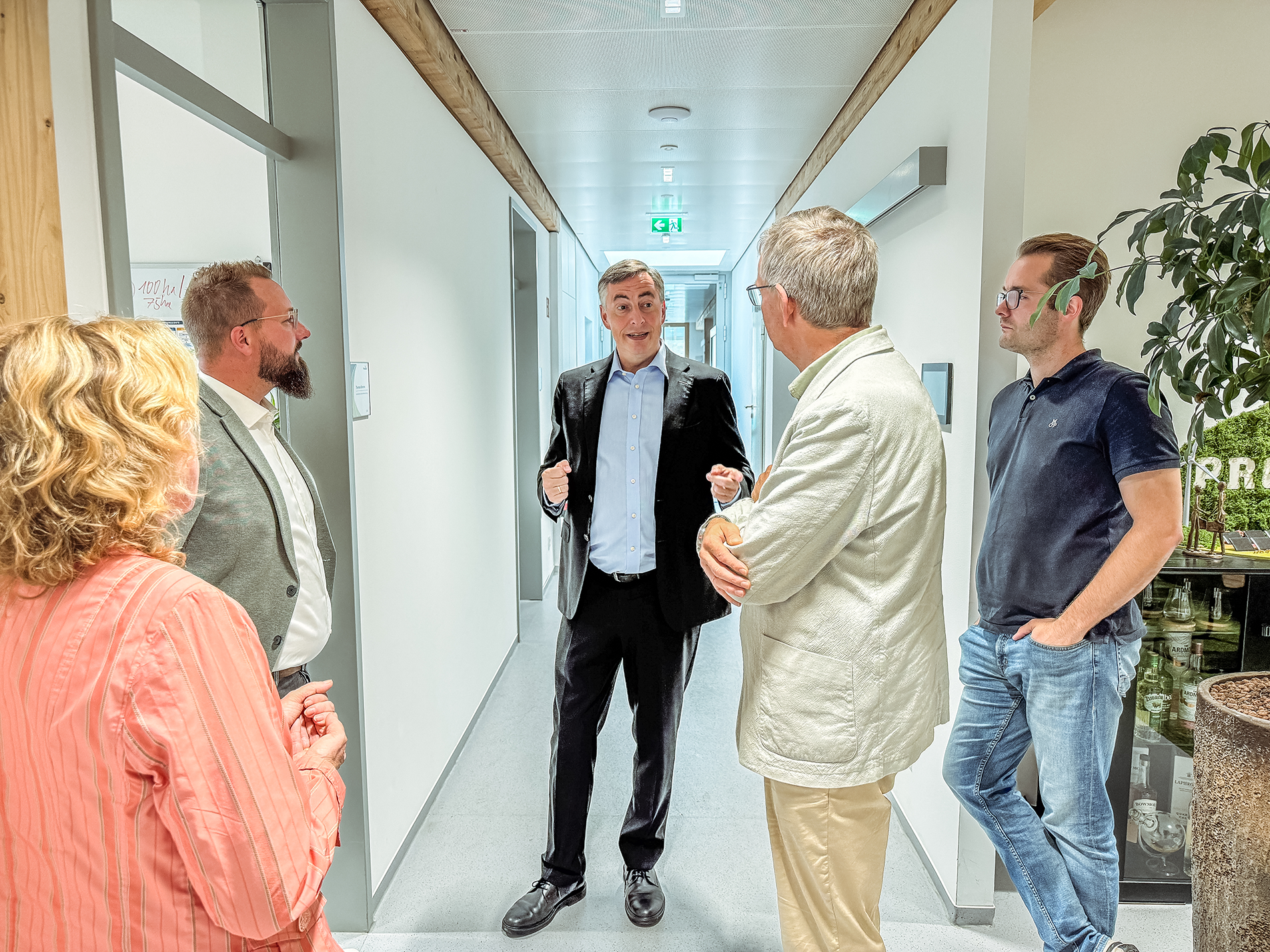
How can the framework for renewable energy be designed so that companies continue to invest and implement projects locally? Prowind Managing Director Johannes Busmann discussed these and other questions with Member of the European Parliament David McAllister during his visit to the Klimaquartier in Osnabrück.
The visit took place as part of McAllister's campaign support tour in Lower Saxony. The focus was on current developments surrounding the planned reform of the Renewable Energy Sources Act (EEG) and the grid connection package, as well as Prowind's perspective as a renewable energy project developer.
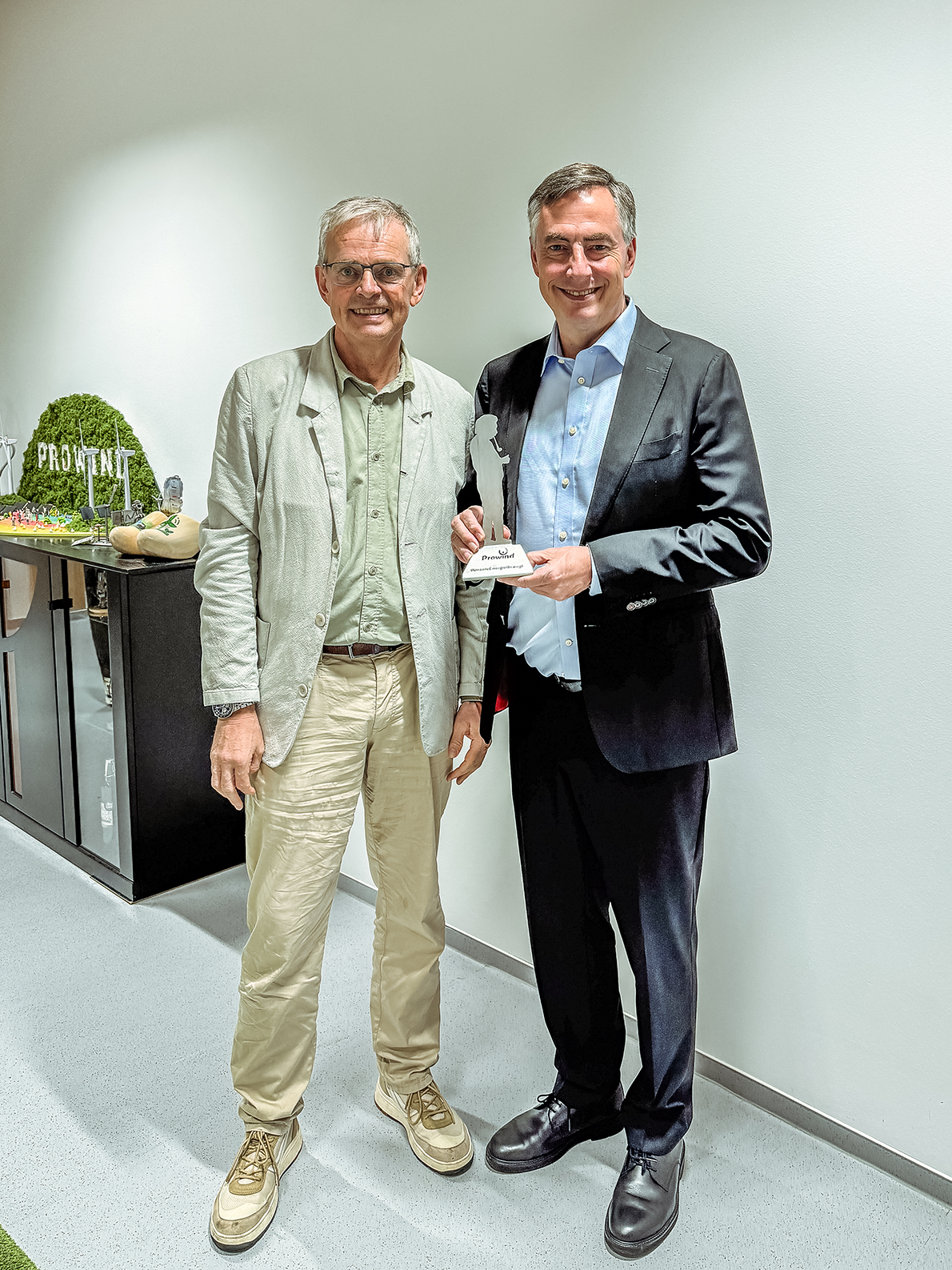
The visit began with a tour of the Klimaquartier. David McAllister and Johannes Busmann, together with Prowind Managing Directors Thomas Berens and Hendrik Möllering and Hendrik Witte, co-founder of the Klimaunion, discussed current topics relating to the energy transition.
For Prowind, it was particularly important to contribute the perspective of practical project development. Political frameworks have a direct impact on whether renewable energy projects can be developed, financed and implemented economically.
A key point of the visit was the handover of Prowind's position paper on the planned EEG reform and the grid connection package by Johannes Busmann to David McAllister.
In it, Prowind endorses the key demands of LEE Niedersachsen|Bremen. The focus is on three topics: no unnecessary barriers to market-based activity, investment security and a targeted approach to grid bottlenecks.
In Johannes Busmann's view, the energy transition above all needs speed and reliable economic conditions.
“To make Germany secure, self-sufficient and sustainable in its energy supply, the energy transition needs speed. For that, companies must be able to invest, develop projects and implement them locally. This only works with reliable economic conditions,” says Johannes Busmann.
Prowind is particularly critical of new regulatory hurdles, blanket output limits and interventions in existing economic agreements. These can create additional uncertainty and slow down investment in renewable energy.
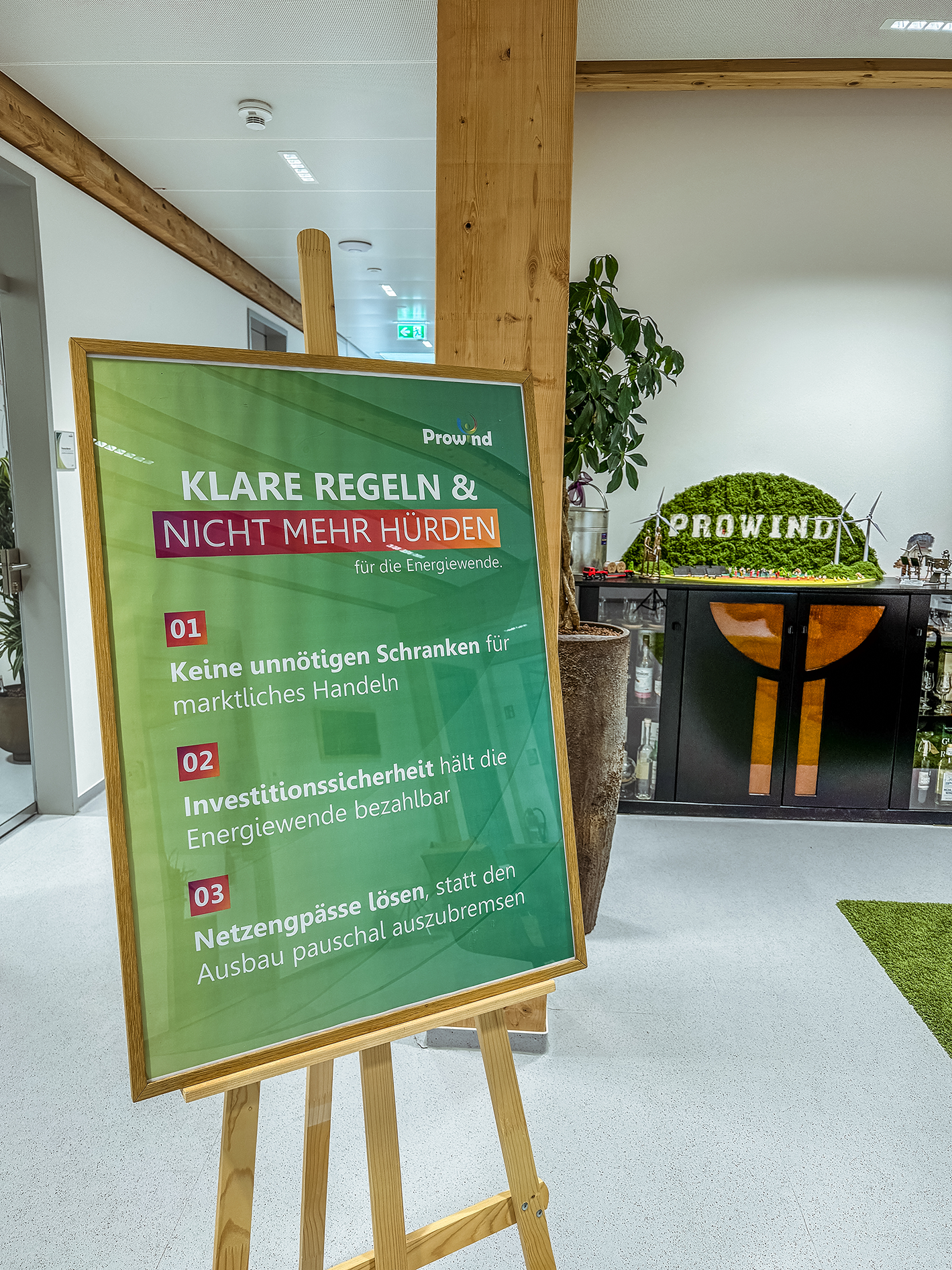
Another focus of the discussion was the importance of investment security. Renewable energy projects are capital-intensive and financed over many years. Reliable framework conditions help to reduce risks and finance projects on attractive terms. In Prowind's view, new regulatory requirements must not unnecessarily weaken this foundation, because rising risks can lead to higher capital costs and thus also increase the cost of generating electricity.
The handling of grid bottlenecks was also discussed. Prowind advocates consistently pushing ahead with grid expansion while making smarter use of existing grid capacity. Digitalisation, smart meters and other intelligent solutions can help to better match generation and consumption. Grid bottlenecks should be resolved specifically where they actually occur, instead of placing blanket limits on the expansion of renewable energy.


